How to Identify Hidden Roof Damage After Summer Storms
A summer storm can pass in minutes while leaving roof damage that goes unnoticed for months. Hail may bruise shingles without breaking them, and straight-line winds can loosen flashing or lift shingle edges that settle back into place. By the time water appears on a ceiling, moisture may have already reached the roof decking or insulation.
For homeowners around Olathe, a prompt visual check followed by a professional assessment can prevent a manageable repair from becoming a major expense. This guide explains what to look for, when to stay off the roof, and how to document possible damage for an insurance claim.
Why Storm Damage Is Often Easy to Miss
Not every damaged roof leaks immediately. Asphalt shingles are designed in overlapping layers, so the roof may continue shedding water even when individual shingles have been compromised. Problems can emerge later as heat, wind, and repeated rainfall widen small openings.
Hidden damage commonly includes:
- Hail bruising: An impact can fracture the fiberglass mat beneath the shingle surface. The spot may feel soft even if there is no visible hole.
- Granule loss: Hail and wind can remove the protective granules that shield asphalt from ultraviolet exposure. Accelerated aging often follows.
- Broken adhesive seals: Wind can separate shingles from their sealing strips, making them vulnerable during the next storm.
- Loose flashing: Metal around chimneys, walls, skylights, and plumbing vents may shift just enough to let water enter.
- Damaged roof decking: Repeated moisture exposure can soften the wood beneath an otherwise normal-looking roof surface.
Spring storms get most of the attention, but late-summer heat can make existing damage worse. High temperatures expand roofing components, while cooler nights cause contraction. That movement can turn a small storm-related weakness into an active leak.
A Safe Wind and Hail Damage Checklist
You can complete a useful preliminary inspection without climbing onto the roof. Begin at ground level after the weather has cleared, then check the attic if it is safe and accessible.
Outside the home
Walk around the property and look for:
- Shingle pieces or roofing debris in the yard
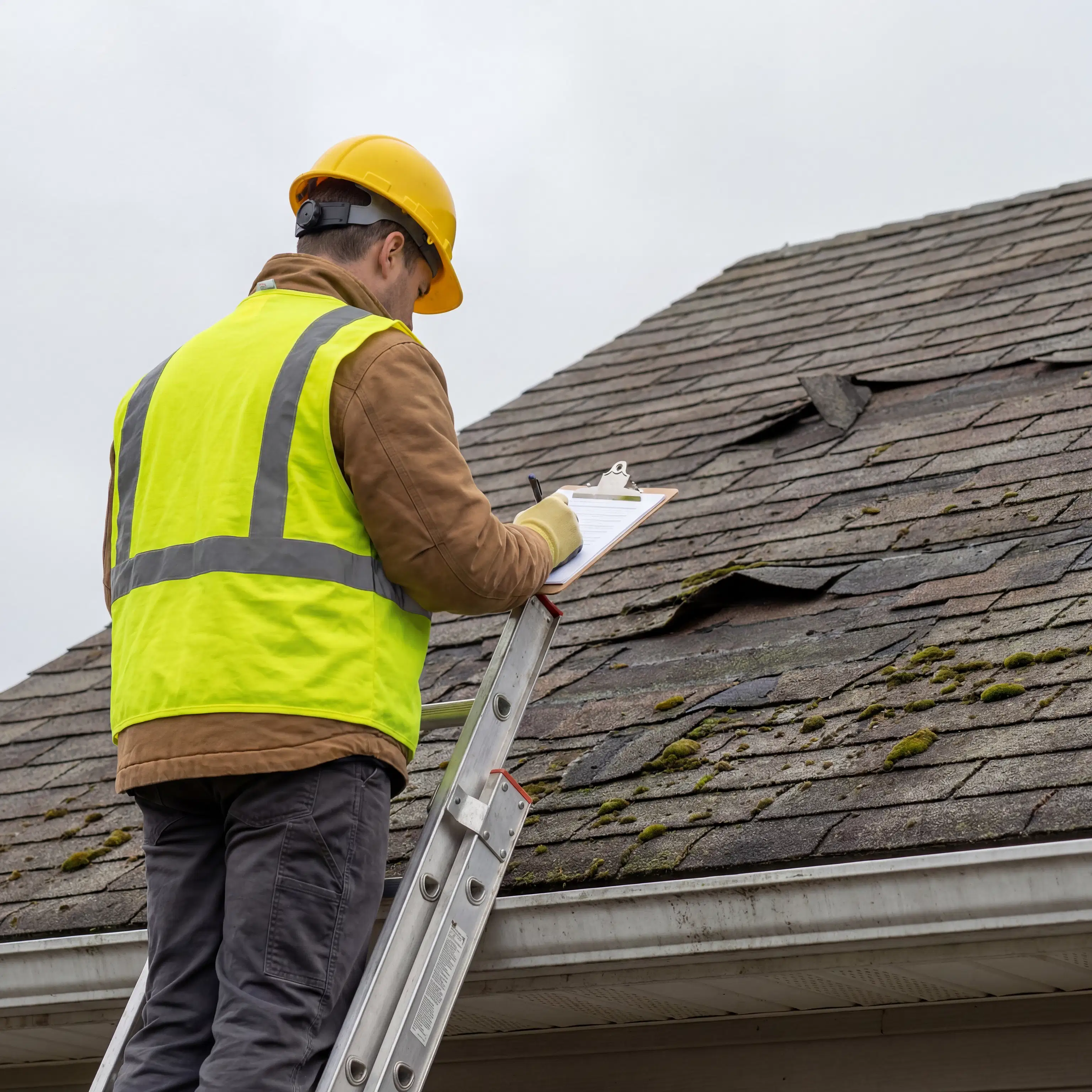
- Lifted, curled, missing, or uneven shingle tabs
- Dents on gutters, downspouts, vents, or metal flashing
- Excessive granules collecting at downspout outlets
- Bent gutters or sections pulling away from the fascia
- Loose siding, damaged window screens, or dented outdoor equipment
- Tree limbs resting on or scraping the roof
Collateral damage to gutters, screens, and metal surfaces does not prove that the roof is damaged, but it can show the direction and severity of the storm.
Inside the home
Check the attic with a flashlight. Look for dark stains, damp insulation, dripping water, musty odors, or daylight entering through the roof deck. Also inspect ceilings and walls for yellow-brown rings, peeling paint, bubbling drywall, or unexplained dampness.
Do not walk on a wet, steep, or storm-damaged roof. Loose materials and softened decking can create serious fall hazards.
When a Professional Roof Inspection Matters
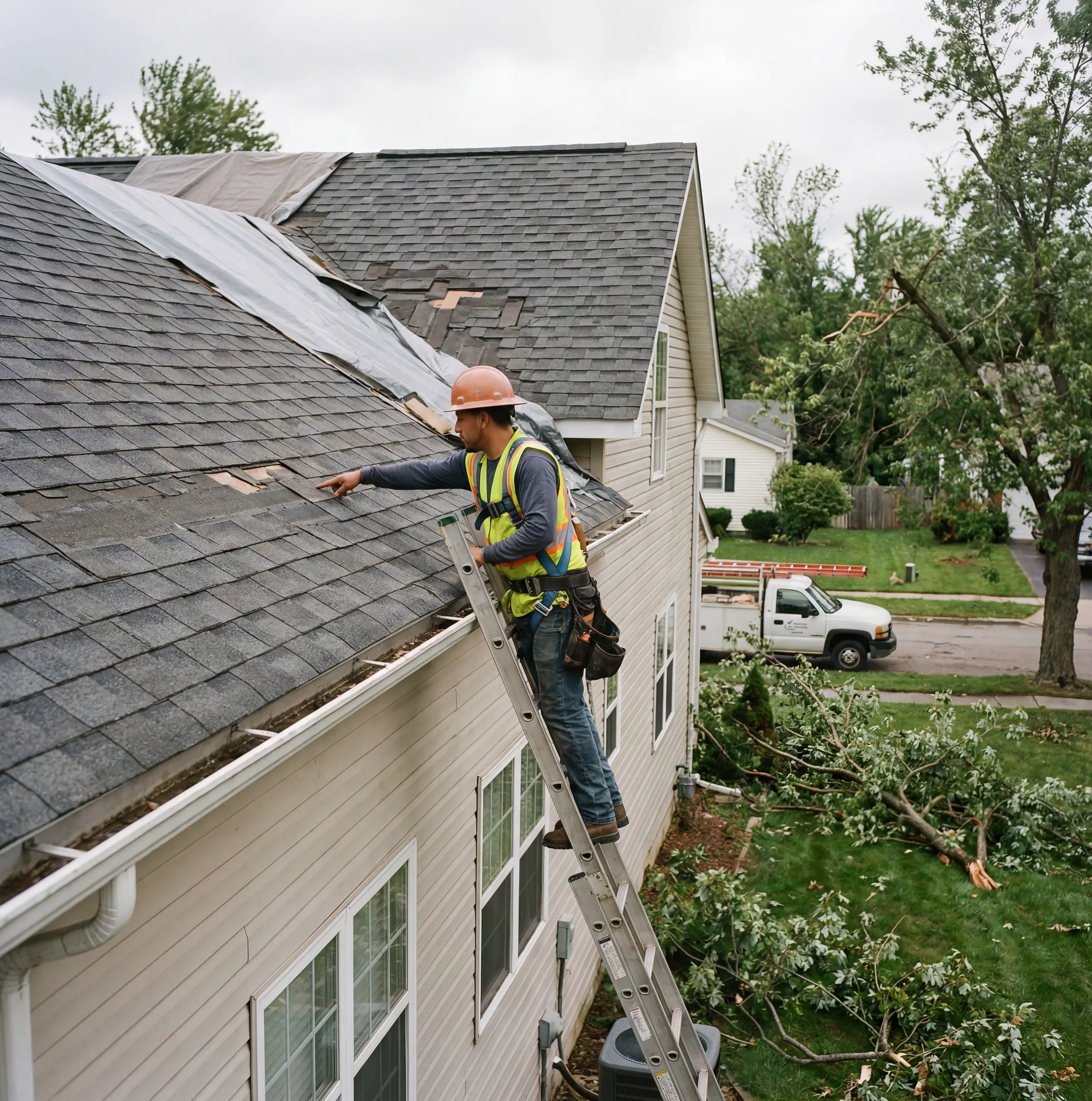
Schedule an assessment when hail, high winds, falling branches, or wind-driven rain have affected your property—even if you cannot see an active leak. A professional roof repair evaluation should examine the entire roofing system rather than focusing only on the most obvious spot.
A thorough inspection may include:
- Shingles, seams, ridges, valleys, and roof edges
- Flashing around chimneys, vents, skylights, and walls
- Gutters, fascia, soffits, and drainage paths
- Attic ventilation, insulation, decking, and moisture evidence
- Photographs and notes identifying the location and likely cause of damage
Drone-assisted inspections and aerial measurement software are increasingly used to document hard-to-reach areas and produce accurate dimensions. These tools are particularly helpful after widespread storms, but they do not replace hands-on evaluation when closer examination is needed.
Before hiring someone who appears after a storm, verify the contractor’s active registration under the Kansas Roofing Registration Act, liability insurance, permanent contact information, and local references. Avoid pressure to sign immediately or promises that a contractor can guarantee insurance coverage. A trustworthy company will explain its findings, scope, price, and warranties in writing.
Repair, Replacement, and Insurance: What Happens Next?
Storm damage does not automatically mean you need a new roof. A localized problem involving several shingles, a vent, or a section of flashing may be suitable for repair. Replacement may be more practical when damage is widespread, the roof is already near the end of its service life, matching materials are unavailable, or the decking has deteriorated.
Costs depend on roof size and pitch, material type, accessibility, labor needs, and the amount of hidden decking damage. Because material prices fluctuate, an itemized written estimate is more useful than a broad price quoted without an inspection. Completion time also varies with the scope of work, material availability, and weather-related scheduling.
Homeowners insurance often covers sudden hail or wind damage, subject to policy terms, exclusions, depreciation, and the deductible. Normal wear, deferred maintenance, and installation defects generally are not storm losses. Report suspected damage promptly, save photos and receipts, and avoid permanent work until the insurer has had an opportunity to inspect unless immediate repairs are necessary to prevent further damage.
Midwest Roofing Solutions LLC can help document roof conditions and explain the repair scope during the roof insurance claims process. Keep copies of the contractor’s report, estimate, adjuster summary, and all claim-related communication. The insurer—not the contractor—makes the final coverage decision.

Address Small Problems Before the Next Storm
The most important signs of roof damage after a severe storm are not always dramatic. Missing shingles demand attention, but soft hail bruises, failed seals, loosened flashing, attic moisture, and concentrated granule loss can be just as consequential. Inspect from the ground, document what you observe, and rely on trained professionals for rooftop work.
If replacement becomes necessary, ask about Class 4 impact-resistant shingles, properly rated wind systems, and metal roofing. These options may offer greater resilience, while reflective materials can help reduce heat absorption. Product eligibility for insurance discounts varies, so confirm any potential savings directly with your carrier. Ask for both manufacturer and workmanship warranty terms in writing.
Midwest Roofing Solutions LLC has served customers since 2005 and provides roof inspections, storm-related residential roof repair, full roof replacement, maintenance, gutters, siding, commercial roofing, and emergency repair services. If a recent storm crossed the Kansas City region, contact our team to arrange an assessment before hidden damage has time to spread.